Dr Gary Linkov
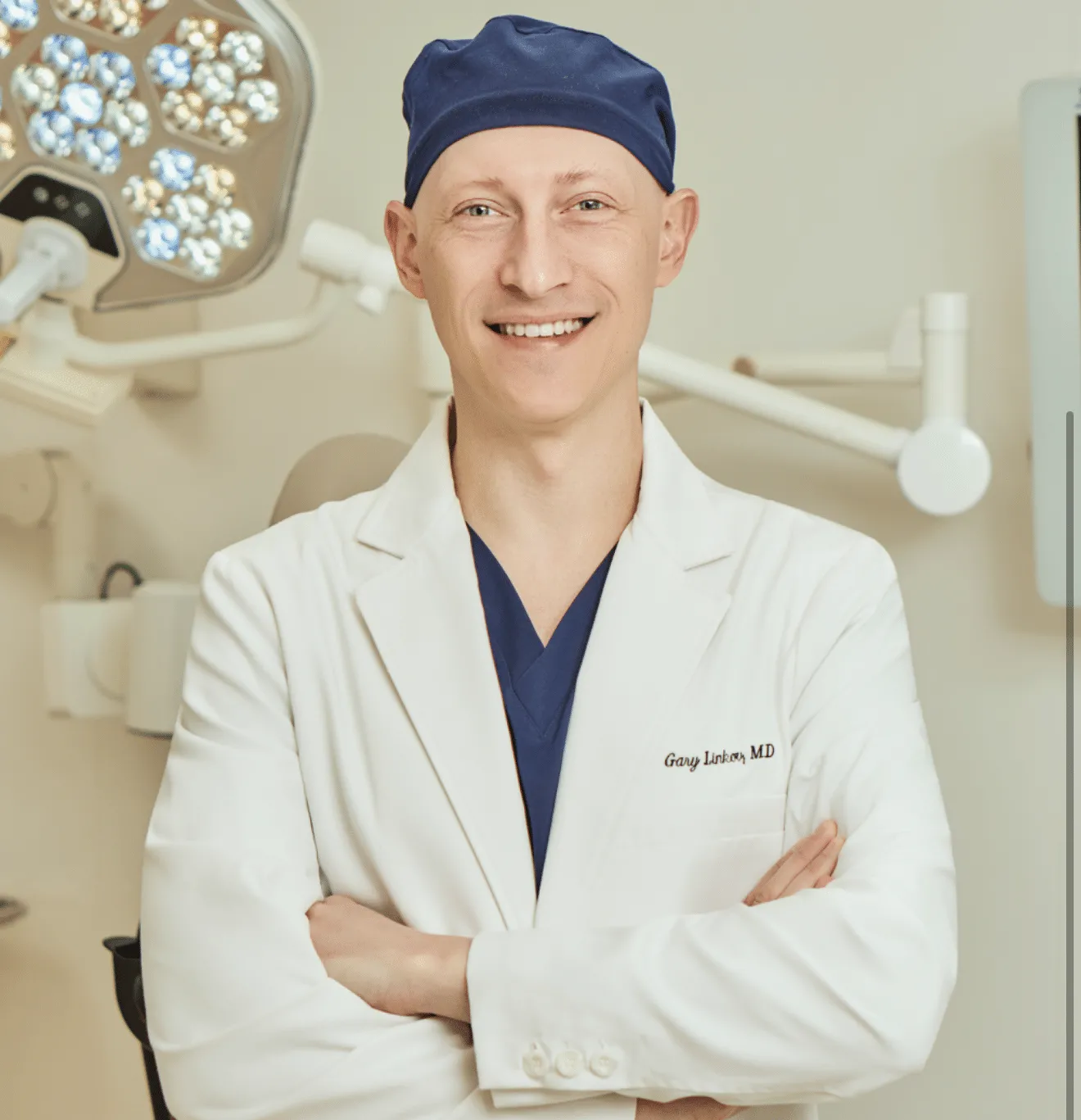
Dr Gary Linkov is a double board-certified facial plastic and reconstructive surgeon and hair restoration specialist based in Midtown Manhattan, New York City. He is the founder of Linkov Hair Surgery and City Facial Plastics, where his work combines detailed medical assessment, facial aesthetics and modern surgical hair restoration. Dr Linkov treats men and women experiencing a wide range of hair loss concerns. His surgical practice includes Follicular Unit Extraction, known as FUE, Follicular Unit Transplantation, known as FUT, hairline restoration, eyebrow and beard transplantation, selected body hair procedures, scar repair and surgical hairline advancement. He also assesses non-surgical options when surgery is not necessary, appropriate or likely to provide the best long-term outcome. His background in facial plastic surgery is particularly relevant to hair restoration. A natural-looking hair transplant is not determined by graft count alone. It depends on facial proportions, age-appropriate hairline design, the angle and direction of every implanted follicle, realistic density transitions and responsible use of a patient’s limited donor supply. This balance of surgical planning, aesthetic judgement and patient education is central to Dr Linkov’s approach. It is also one of the reasons he has joined the SpexHair network of partnering clinics.
I recently interviewed Dr Gary Linkov in New York for The Hair Loss Lab podcast, where we explored his personal experience with hair loss, his approach to natural hair restoration and the importance of responsible, patient-first treatment. Our conversation offered a valuable insight into the expertise, empathy and long-term thinking behind his work.
Choosing a hair transplant surgeon should never be based on marketing, price or an impressive graft estimate alone. Patients need a properly qualified doctor who will investigate the cause of their hair loss, determine whether it is stable, assess the donor area carefully and explain what can realistically be achieved over the patient’s lifetime.
Dr Linkov brings together several qualities that matter to informed patients:
- Double board certification in Facial Plastic and Reconstructive Surgery and Otolaryngology, Head and Neck Surgery
- Advanced training in both FUE and FUT hair transplant surgery
- A strong understanding of facial anatomy, proportion and aesthetic balance
- Experience treating scalp, hairline, eyebrow and beard concerns
- Experience working with different hair types, textures and curl patterns
- A multidisciplinary approach that considers diagnosis and non-surgical treatment as well as surgery
- A substantial public education platform focused on hair loss, hair restoration and facial aesthetics
- Full membership of the International Society of Hair Restoration Surgery, which records his membership from 2019
SpexHair’s association with Dr Linkov is built around shared priorities of patient education, transparency, responsible planning and natural-looking outcomes. Inclusion should never replace a patient’s own research or an individual medical consultation. It does, however, provide a credible starting point for people researching an experienced hair transplant surgeon in New York City.

EDUCATION, MEDICAL TRAINING AND CREDENTIALS
Dr Linkov is a native New Yorker. He completed his undergraduate degree at Cornell University, graduating as salutatorian with a Bachelor of Science focused on human development and psychology.
He received his medical degree from Columbia University College of Physicians and Surgeons. During medical school, he was funded to undertake head and neck cancer research at Memorial Sloan Kettering Cancer Center. Dr Linkov subsequently completed residency training in Otolaryngology, Head and Neck Surgery at the Temple Head and Neck Institute in Philadelphia, with additional experience at Fox Chase Cancer Center. He served as chief resident during his final year. He then completed an accredited fellowship in Facial Plastic and Reconstructive Surgery at Washington University in St Louis, where he also served as a clinical instructor.
His fellowship work included running a facial plastic surgery clinic at the St Louis Veterans Affairs hospital and performing reconstructive facial surgery for veterans. Following his fellowship, Dr Linkov undertook advanced training in hair transplant surgery at the Foundation for Hair Restoration under Dr J Epstein. This included FUE and FUT hair transplantation, eyebrow and beard transplantation, body hair transplantation and surgical hairline advancement. Dr Linkov later served as Director of the Women’s Center for Hair Loss in New York City.
Dr Linkov is:
- A Diplomate of the American Board of Facial Plastic and Reconstructive Surgery
- A Diplomate of the American Board of Otolaryngology, Head and Neck Surgery
- A full member of the International Society of Hair Restoration Surgery
- A member of the New York Facial Plastic Surgery Society
He has also held clinical and teaching roles, including serving as an attending physician at Lenox Hill Hospital and as a former Adjunct Assistant Professor at New York University, where he taught rhinoplasty to head and neck surgery residents.
A PERSONAL UNDERSTANDING OF HAIR LOSS
Dr Linkov’s connection to hair loss is personal as well as professional. He has spoken publicly about experiencing an autoimmune hair loss condition himself. This gives him direct insight into the uncertainty, frustration and emotional impact that can accompany changes in a person’s hair. This matters because hair restoration is not simply a technical procedure. The right plan must reflect the diagnosis, the patient’s expectations, their available donor hair and the likelihood of future hair loss. In some cases, the most responsible recommendation is to stabilise the hair loss medically, investigate an underlying condition, delay surgery or avoid surgery altogether.

ROOTDESIGN™ AND DR LINKOV’S APPROACH TO NATURAL RESULTS
Linkov Hair Surgery describes its proprietary planning methodology as RootDesign™. The concept moves attention away from graft numbers as the main measure of a hair transplant and towards the details that determine whether a result looks convincing in real life. His results page can be seen here : Dr Gary Linkov hair transplant results
These include:
- Hairline architecture suited to the patient’s facial structure
- Correct follicle angle and direction
- Subtle irregularity rather than an artificial, perfectly straight edge
- Gradual density transitions
- Appropriate selection and placement of single-hair grafts at the leading edge
- Consideration of hair calibre, curl, colour contrast and existing density
- Long-term planning for future hair loss
- Conservation of the finite donor area
The aim is not simply to recreate the hairline a patient had as a teenager. It is to design an age-appropriate restoration that suits the face, remains believable as the patient gets older and does not unnecessarily exhaust the donor supply. The correct technique depends on the patient’s goals, scalp characteristics, hairstyle, scarring preferences, previous surgery and long-term donor strategy.
HAIRLINE AND FRONTAL SCALP RESTORATION
- Hairline work is one of the most visually demanding areas of hair transplantation. Dr Linkov applies his facial plastic surgery training to the shape, height and proportions of the hairline. A natural result requires more than density. It depends on fine single-hair grafts at the front, controlled irregularity and placement that follows the direction and angle of native hair growth. Long-term planning is also essential. An aggressively low or dense hairline may look appealing initially, but it can become difficult to maintain if the patient experiences significant hair loss behind it.
NO-SHAVE AND LIMITED-SHAVE FUE
- Selected patients may be suitable for a donor band trim or a more limited-shave FUE approach. This can make the early recovery less conspicuous. However, suitability depends on the number of grafts required, donor access, hair length and the technical requirements of the procedure. Avoiding a full shave should never take priority over safe donor harvesting or surgical accuracy.
EYEBROW HAIR TRANSPLANT
- Eyebrow transplantation requires exceptionally shallow placement angles and careful control of direction, curl and symmetry. Donor hairs retain many of their original characteristics. This means transplanted eyebrow hairs commonly require regular trimming and grooming. Dr Linkov’s advanced hair restoration training includes both FUE and FUT approaches to eyebrow transplantation.
BEARD AND FACIAL HAIR TRANSPLANT
- For suitable patients, follicles can be transplanted to improve beard density, define the goatee or moustache, fill stable scars or create a more complete facial-hair pattern. Design must account for the natural changes in direction found across the cheeks, jawline, chin and upper lip. Hair type, donor characteristics, existing facial hair and the patient’s desired style must all be considered before treatment.
BODY HAIR TRANSPLANTATION
- Body hair may sometimes be considered as a supplementary donor source in carefully selected cases. However, body hair differs from scalp hair in its growth cycle, length, texture and predictability.
It should not be viewed as an unlimited substitute for a depleted scalp donor area. Patients considering body hair transplantation require a careful assessment and realistic expectations.
FEMALE HAIR RESTORATION
- Hair loss in women can have several causes and is not always suitable for transplantation. A thorough assessment is essential to distinguish stable, transplantable hair loss from diffuse or active conditions that may affect the donor area or compromise the final result. Dr Linkov’s previous role as Director of the Women’s Center for Hair Loss supports his experience in this important and often complex area of hair restoration.
For some women, medical investigation or non-surgical treatment may be more appropriate than transplantation.
TRANSGENDER HAIR RESTORATION
- Dr Linkov also treats transgender patients seeking hairline modification or facial-hair restoration. Planning should be individualised around facial proportions, existing hair loss, treatment history, donor supply and the patient’s own goals. It should not rely on a standardised male or female hairline template.
HAIR TRANSPLANT REPAIR AND SCAR CAMOUFLAGE
- Corrective hair transplant work may involve improving an unnatural hairline, addressing old plug grafts, adding hair to selected FUT scars, treating recipient-site pitting or camouflaging stable scars from previous facial surgery or trauma. Repair cases can be more technically demanding than a first hair transplant and may require staged treatment. Scar tissue can have a less predictable blood supply, so growth cannot be assumed. The available options will depend heavily on the condition of the donor area and the nature of the previous surgery.
SURGICAL HAIRLINE ADVANCEMENT
- For selected patients with a naturally high hairline and suitable scalp laxity, surgical hairline advancement can lower the hairline by removing a strip of forehead skin and advancing the hair-bearing scalp.
This is different from hair transplantation and leaves a scar at the hairline. Careful assessment is required to decide whether advancement, transplantation or a combination offers the most appropriate balance.
NON-SURGICAL HAIR LOSS TREATMENT
- Linkov Hair Surgery offers personalised medical and non-surgical treatments as part of a long-term hair restoration plan. Depending on the patient’s diagnosis and suitability, options may include minoxidil, finasteride, platelet-rich plasma, low-level laser therapy and microneedling. Dr Linkov is also the founder of Feel Confident®, a doctor-formulated haircare range for thinning hair. Its ROOTDefense™ system includes thickening shampoo, conditioner, scalp serum and foam, designed to support scalp health, improve volume and make hair appear fuller. These products should be viewed as supportive haircare rather than a replacement for clinically proven medication or hair transplantation. Every recommendation should follow an accurate diagnosis, realistic expectations and a clear discussion of the evidence, benefits, risks and costs.
WHAT TO EXPECT FROM A HAIR TRANSPLANT CONSULTATION
A thorough hair transplant consultation should provide considerably more than a graft estimate or price. At Linkov Hair Surgery in New York City, the consultation process begins by identifying the pattern, progression and possible cause of the patient’s hair loss before discussing surgery or recommending an individual treatment plan. The assessment should consider the patient’s medical and family history, the stability of their hair loss, previous treatments and the likelihood of future progression. Dr Gary Linkov will also evaluate the scalp and donor area, including hair density, calibre, curl, colour contrast and the amount of hair that can be harvested responsibly. Patients can expect a clear discussion of FUE, FUT and appropriate non-surgical hair loss treatments. This should include realistic graft requirements, achievable coverage, hairline design, donor limitations, recovery, potential complications and the expected timeline for growth. In some cases, further medical investigation or a period of stabilising the hair loss may be recommended before surgery. This is particularly important for younger patients, those experiencing rapid or diffuse thinning and anyone whose donor area may be affected by ongoing hair loss.
The cost of a hair transplant with Dr Gary Linkov depends on the chosen technique, the number of grafts required, the complexity and duration of the procedure and whether more than one surgical session may be needed. A personalised quotation should only be provided following a proper medical and donor-area assessment.
HAIR TRANSPLANT RECOVERY AND RESULTS TIMELINE
Hair transplant recovery varies according to the patient and whether FUE or FUT surgery is performed.
FUE involves extracting individual follicular units and usually leaves small dot scars throughout the donor area. FUT involves removing a narrow strip of donor scalp, creating a linear scar that is closed with sutures and may require a later appointment for their removal. Temporary redness, swelling, crusting, tenderness and changes in scalp sensation can occur following either procedure. Some patients may also experience temporary shock loss in the donor or recipient area. The transplanted hair shafts commonly shed during the first few weeks. This is an expected part of the process and does not usually mean the follicles have been lost. Early growth often begins after several months and may initially appear fine or uneven. Visible improvement generally becomes clearer between six and nine months. Hair growth, thickening and maturation can continue for 12 months or longer. Results in the crown may take additional time to develop. No responsible hair transplant surgeon can guarantee an exact density, growth rate or cosmetic result. Outcomes are influenced by the original diagnosis, donor quality, graft handling, scalp blood supply, healing, smoking, aftercare, continuing native hair loss and individual biology.
HAIR TRANSPLANT SAFETY AND INFORMED DECISION-MAKING
Hair transplantation is a surgical procedure and should be approached with the same care as any other form of surgery. Possible risks include bleeding, infection, scarring, cysts, temporary shock loss, altered sensation, uneven or limited growth, donor-area thinning and an unnatural hairline or density pattern. Patients may also be dissatisfied if expectations, donor limitations and future hair loss were not discussed properly before treatment. Before proceeding with a hair transplant, patients should understand who will perform each stage of the operation and the respective responsibilities of the surgeon and surgical team. They should receive clear written instructions covering preparation, recovery and aftercare, together with reliable contact arrangements should any concerns arise. Patients should never feel pressured into booking surgery. Seeking a second opinion is sensible when the diagnosis is unclear, the proposed graft number appears unusually high, the donor area looks limited or the consultation feels more focused on making a sale than protecting the patient’s long-term interests.
DR GARY LINKOV AS AN EDUCATOR AND RESEARCHER
Alongside his clinical work, Dr Gary Linkov has developed a substantial digital education platform covering hair loss, hair restoration, facial plastic surgery and aesthetic medicine.
Through his widely followed videos, Dr Linkov explains hair loss treatments, transplant techniques, celebrity hairlines and developments within cosmetic medicine. This educational content allows prospective patients to understand his clinical reasoning, aesthetic principles and approach to patient care before deciding whether to arrange a consultation. Dr Linkov has also contributed to peer-reviewed articles and medical book chapters covering areas such as facial plastic surgery, reconstruction, tissue engineering and hair restoration. His national media appearances include discussing hair restoration treatment on The Dr Oz Show. A strong media presence should never replace medical credentials, surgical evidence or an individual consultation. However, Dr Linkov’s commitment to accessible education provides patients with an opportunity to assess his knowledge, communication style and treatment philosophy before visiting Linkov Hair Surgery.
DR GARY LINKOV HAIR TRANSPLANT RESULTS
Patients researching Dr Gary Linkov’s hair transplant results should review complete cases rather than relying on isolated before-and-after photographs.
Reliable hair transplant results should be presented using consistent lighting, angles, hair length and styling. Wherever possible, cases should also include clear views of the recipient and donor areas, the procedure performed, the number of grafts transplanted and the length of follow-up. Dr Linkov’s published hair transplant gallery includes FUE restoration of the hairline, frontal scalp and temples, as well as eyebrow transplants, beard transplants and selected limited-shave FUE procedures. Every patient begins with different donor density, hair calibre, curl, colour contrast and levels of existing hair loss. A graft number or density achieved for one patient should therefore never be treated as a prediction of what another patient can expect.
WHY SPEXHAIR RECOGNISES DR GARY LINKOV
Dr Gary Linkov’s advanced surgical training, facial aesthetic expertise, personal understanding of hair loss and commitment to public education make him a strong addition to the SpexHair network of partnering clinics.
His approach reflects a principle I have promoted throughout my own journey as a hair transplant repair patient and independent patient advocate. A hair transplant should never begin with the question, “How many grafts can we move?” It should begin with an accurate diagnosis, an honest assessment of the donor area, an understanding of the patient’s likely future hair loss and a careful decision about whether surgery is genuinely the right option. Hair transplant surgery must be planned for the long term. Donor hair is limited, native hair loss may continue and an aggressive short-term result can create significant problems later. Responsible treatment therefore requires conservative planning, realistic expectations and a willingness to recommend medical treatment, delay surgery or advise against it when appropriate.
For patients researching an experienced hair transplant surgeon in New York City, Dr Gary Linkov and Linkov Hair Surgery offer a credible option to consider. As always, I encourage patients to educate themselves, ask direct questions, review comparable results and take sufficient time before making any surgical decision.
Transparency Disclosure: This clinic pays a fixed monthly association fee to SpexHair. This does not influence the independent assessment process. SpexHair does not receive commissions, sell patient leads, or receive payment based on whether a patient proceeds with treatment.

The Hair Raising Truth
Download the free E-book and find out everything you need to know about losing your hair and getting it back