Does Topical Minoxidil Work?
Minoxidil is one of the most well-known treatments for hair loss, commonly used by men and women experiencing thinning hair or a receding hairline. But does Minoxidil work for everyone? How long does it take to see results? The short answer is that Minoxidil can be effective if used correctly and consistently. It helps slow hair loss, stimulate regrowth, and improve hair density, but results vary depending on application, dosage, and genetics. In this guide, I’ll explain how Minoxidil works, the differences between topical and oral Minoxidil, the best application techniques, potential side effects, and expert insights. You should be aware of this if you’re considering Minoxidil for hair regrowth.
What is Minoxidil?
In this section, we’ll look at where Minoxidil came from, how it was first discovered to affect hair growth, and the science behind how it works in both topical and oral forms.
History and Development

Minoxidil was initially developed in the 1950s as a medication for high blood pressure (hypertension). It was designed as a vasodilator, meaning it helped widen blood vessels to improve circulation and lower blood pressure.
However, doctors noticed an unexpected side effect during clinical trials where patients experienced excessive hair growth across their bodies! This discovery led researchers to investigate Minoxidil as a hair loss treatment.
By the late 1980s, the first FDA-approved topical Minoxidil solution became available for men experiencing hair thinning. Shortly after, a 2% formulation was introduced for women.
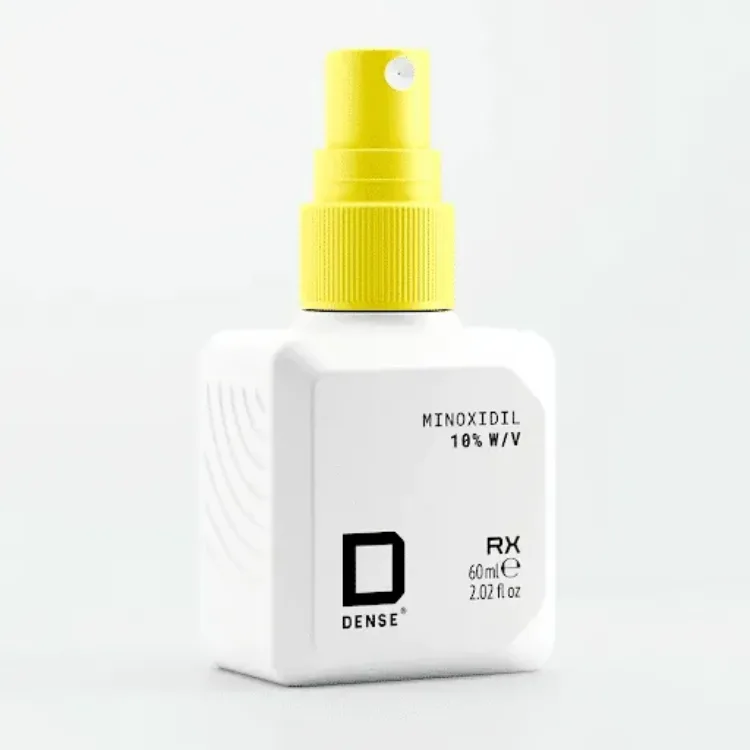
Dense Minoxidil Spray
Advanced Minoxidil products like Dense Minoxidil Spray offer an easy-to-use solution for those looking to support hair regrowth effectively.
Over time, Minoxidil has remained one of the most widely used and clinically studied hair regrowth treatments.
How Minoxidil Works
Minoxidil stimulates hair growth by increasing blood flow to the scalp and extending the growth phase of hair.
Unlike other hair loss treatments that block DHT (dihydrotestosterone), Minoxidil doesn’t target hormones and directly improves hair follicle function.
Minoxidil’s effectiveness comes from its ability to:
- Improve blood circulation to hair follicles, delivering more oxygen and nutrients.
- Prolong the hair’s growth cycle: preventing premature hair shedding.
- Reawaken dormant follicles: This can sometimes lead to new hair growth.
Minoxidil is available in two forms:
- Topical Minoxidil
- Oral Minoxidil
I will discuss both in more detail in the following sections of this post. So, keep reading to learn more about topical and oral Minoxidil.
Topical Minoxidil
Topical Minoxidil is available in liquid or foam formulations. It is applied directly to the scalp and improves local blood flow, stimulating weakened or dormant hair follicles. This form is widely used for female and male pattern baldness and is available over the counter.
Dense Minoxidil Spray
Thicker, stronger, denser – where science meets confidence.The Minoxidil spray formulas trusted by experts, designed for results you can see and feel.
Ready to take the next step? Try Dense Minoxidil Spray for an easy, effective hair regrowth solution!
Visit DENSE Hair Experts : Use Code ‘SPEX20’
Available Concentrations
Topical Minoxidil is available in two main strengths:
- 5% Minoxidil – The most commonly used concentration, recommended for men and some women with more advanced hair thinning.
- 2% Minoxidil – Primarily marketed for women, higher strength can sometimes cause unwanted facial hair growth.
Studies show that 5% Minoxidil is more effective than 2% Minoxidil for hair regrowth, but 2% Minoxidil remains a good option for those with sensitive scalps or concerns about side effects.
Dr. Robert Bernstein, a leading hair restoration expert, provides detailed insights on using 2% Minoxidil in his Minoxidil 2% guide.
Liquid vs. Foam
Minoxidil comes in two formulations, each with unique properties:
- Foam Minoxidil: It dries quickly, is less greasy, and is often preferred by users with sensitive scalps because it does not contain propylene glycol, a common irritant found in the liquid version.
- Liquid Minoxidil: penetrates deeper into the scalp, but it can feel greasier and may cause mild irritation in some users.
The choice between foam and liquid often comes down to personal preference, with foam being more straightforward to apply and liquid providing slightly better absorption.
How to Apply Topical Minoxidil
Watch the video above to learn how to apply Dense Minoxidil Spray correctly for the best results!
Preparing the Scalp
For optimal results, apply minoxidil to a clean, dry scalp. The correct application ensures the solution is fully absorbed without interference from natural oils, dirt, or styling products.
- Wash your hands before and after application.
- Avoid applying Minoxidil to a wet scalp, as excess moisture can dilute the formula.
- If using other hair care products, allow Minoxidil to fully dry before applying anything else.
Step-by-Step Application
Here’s how to apply both the liquid and foam versions of topical Minoxidil correctly to get the best possible results.
Liquid Minoxidil Application:
- Use the dropper provided to measure 1 ml of Minoxidil.
- Apply directly to the affected scalp area, parting the hair if necessary.
- Gently massage the solution into the scalp using your fingertips.
- Let it fully dry (usually 2-4 hours) before washing your hair or applying styling products.
Foam Minoxidil Application:
- Dispense half a capful of foam into your hand.
- Apply directly to the scalp, especially in thinning areas.
- Massage the foam into the scalp using circular motions.
- Allow it to dry completely before styling or washing your hair.
Dosage and Frequency
- Men: 5% Minoxidil twice daily for best results.
- Women: 2% Minoxidil twice daily or 5% Minoxidil once daily (to reduce the risk of side effects).
- Skipping applications can slow progress, so consistency is key.
Proper application is essential for achieving maximum regrowth results with Minoxidil. Many users make small but avoidable mistakes that can impact effectiveness.
Dr. Robert Bernstein, a respected hair restoration specialist, offers detailed application tips for Minoxidil, covering common errors and best practices.
Spex Common Mistakes to Avoid
- Applying too much Minoxidil: More is not better and won’t speed up results.
- Not applying directly to the scalp: Minoxidil needs direct contact with the scalp to be effective.
- Washing hair too soon after application: Wait at least 4 hours before shampooing.
Expected Results and Timeline
Wondering when you’ll see results? This section covers the typical timeline of hair regrowth, what to expect in the first few months, and how to maintain your progress.
The Shedding Phase
One of the most concerning parts of using Minoxidil is the initial shedding phase. Many users notice increased hair loss in the first 4-8 weeks of treatment.
Shedding happens because Minoxidil forces weaker, older hairs into the shedding phase for new, more substantial hair growth. Shedding is a normal and temporary reaction that typically stops after 2 months.
When to Expect Visible Regrowth
- Months 1-2: The shedding phase begins.
- Months 3-6: New hair growth starts becoming visible.
- Months 6-12: Hair appears thicker and fuller in areas where Minoxidil is applied.

Minoxidil does not work overnight; patience is required to achieve full results.
Long-Term Maintenance
To maintain results, Minoxidil must be used continuously. If treatment is stopped, the new hair growth will gradually decrease, and hair loss will return to its previous state.
For best long-term success:
- Use Minoxidil consistently: missing applications can weaken results.
- Combine with other treatments, such as Finasteride or low-level laser therapy (LLLT), for better long-term hair retention.
- Monitor progress every 3-6 months to track regrowth and adjust treatment if needed.
Sign Up for Spex FREE E-Book
Want more expert hair loss tips? Sign up now to get exclusive insights, treatment guides, and Spex’s latest advice delivered to your inbox!
Combining Minoxidil with Other Treatments
This section breaks down how Minoxidil can work alongside Finasteride, supplements, and laser therapy to support stronger results.
Minoxidil and Finasteride
Minoxidil stimulates regrowth but doesn’t block DHT, the hormone causing hair loss. Finasteride reduces DHT levels, preventing further thinning. When used together, they provide better results than when used alone.
Dr Robert Bernstein breaks down how Finasteride and Minoxidil work together to improve hair retention in this expert guide.
Dense Minoxidil Spray
Thicker, stronger, denser – where science meets confidence.The Minoxidil spray formulas trusted by experts, designed for results you can see and feel.
Ready to take the next step? Try Dense Minoxidil Spray for an easy, effective hair regrowth solution!
Visit DENSE Hair Experts : Use Code ‘SPEX20’
Supplements and Hair Health
While hair loss supplements won’t regrow hair, they can support scalp health.
Studies referenced in Dr. Bernstein’s overview on DHT-blocking supplements suggest that saw palmetto may reduce DHT levels, potentially helping those experiencing excessive shedding or slow regrowth.
Low-Level Laser Therapy (LLLT)
LLLT devices like laser caps use red light therapy to improve circulation and stimulate follicles. Some users see thicker hair, but results vary.
If Minoxidil and other treatments aren’t enough, consult a hair loss specialist for personalized options.
Experts featured in Dr. Bernstein’s laser therapy guide explain how red light therapy improves circulation and may help stimulate follicles for more vigorous regrowth.
Side Effects and Safety Considerations
Minoxidil is generally safe, but side effects vary depending on whether it’s used topically or orally. Below is a comparison of the most common issues:
| Side Effect | Topical Minoxidil | Oral Minoxidil |
|---|---|---|
| Scalp irritation | Common (dryness, itching, redness) | Not applicable |
| Shedding phase | Temporary (first 4-8 weeks) | Temporary (first 4-8 weeks) |
| Dizziness & low blood pressure | Rare | Possible (due to vasodilation) |
| Fluid retention | No | Possible, especially at higher doses |
| Hair growth in unwanted areas | Rare, but possible near application sites | More common (facial/body hair growth) |
| Drug interactions | Minimal | Required medical supervision |
Spex Recommends: Switching to foam Minoxidil (which lacks propylene glycol) or using a moisturizer can help with scalp irritation. Those experiencing systemic side effects from oral Minoxidil should consult a doctor about adjusting the dosage.
Minoxidil may not be safe for those with:
- Heart conditions or low blood pressure (oral Minoxidil can affect circulation).
- Skin sensitivities (topical Minoxidil may irritate).
- Pregnancy or breastfeeding (not recommended due to potential risks).
If you’re unsure whether Minoxidil is right for you, consult a medical professional before starting treatment.
Before and After Results
Many users see significant hair regrowth with consistent Minoxidil use. Below are real-life examples of individuals I know who have successfully improved hair density and slowed hair loss.
Before

After

Expert Insights
Dermatologists and trichologists emphasize consistent application and patience when using Minoxidil. They recommend combining it with DHT blockers, a healthy scalp routine, and regular check-ups to monitor progress.
Spex has compiled a list of trusted trichologists who can provide personalized hair loss assessments for those seeking professional guidance.
Final Thoughts
Minoxidil is a proven treatment for hair regrowth. It is available in topical and oral forms. Topical Minoxidil is widely used and easy to apply, while oral Minoxidil offers a systemic option for those who don’t respond to the topical version.
Choosing the right option depends on individual hair loss patterns, tolerance to side effects, and medical considerations. Consistency is key for best results; those unsure about treatment should consult a specialist.
Disclaimer
Full disclosure: I have a business relationship with Dr. Edgar and refer people to him who inquire about legitimate and affordable medication for hair loss treatment. I have used him for years and know him to be ethical and legitimate.

The Hair Raising Truth
Download the free E-book and find out everything you need to know about losing your hair and getting it back