SpexHair Exposing The Truth: The Reality Behind Hair Loss & Hair Transplants

6 min read

In today’s hyper-visible, marketing-driven landscape, SpexHair has become established and well known for voicing and exposing The Truth. The truth is not just a message it is a necessity. The reality is that the hair transplant industry has never been louder, yet genuine, medically grounded insight has never been harder for patients to find. Search terms like best hair transplant, FUE results, and cheap hair transplant abroad dominate the online space, but they rarely reflect the full picture. This is where my approach to help highlight the truth approach becomes critical, cutting through noise, exposing industry practices, and helping patients make decisions rooted in understanding rather than emotion. At SpexHair, built on over two decades of patient advocacy and real-world experience, the focus has always been the same to educate first, protect patients and expose the truth.
The Truth About the Hair Transplant Industry
The modern hair restoration industry operates across two very different models. On one side, there are ethical, medically led clinics focused on long-term patient outcomes. On the other, there is a rapidly expanding segment of high-volume, commercially driven clinics. Understanding the difference is where SpexHair and the Truth becomes essential.
What patients are often not told:
- Hair transplantation is permanent, but hair loss is progressive
- Your donor area is finite once depleted, it cannot be restored
- Not all clinics are surgeon-led, despite what marketing suggests
- Results shown online often reflect short-term outcomes, not long-term reality
- This is not about creating fear it is about restoring context.
The Rise of High-Volume “Hair Mill” Clinics
- One of the most concerning shifts in the industry is the growth of high-volume clinics performing multiple procedures per day. Through ongoing discussions with leading surgeons, one consistent concern emerges:
- When surgery becomes volume-driven, medical integrity is at risk.
- Key concerns with this model:
- Delegation of critical surgical steps to technicians
- Limited surgeon involvement and oversight
- Focus on throughput over precision
Poor surgical planning and high-volume clinic models significantly increase the risk of over-harvesting, compromised graft survival, and unnatural hairline design issues that can permanently impact both aesthetic outcomes and future treatment options. Hair transplantation is not a repeatable commodity; it is a finite, strategic procedure that relies on careful donor management and long-term planning. When executed poorly, the consequences are often irreversible, leaving patients with limited corrective options and highlighting the critical importance of choosing an ethical, medically driven approach over short-term, commercially driven solutions.
Long-Term Planning: The Missing Conversation
A core pillar of the truth at Spexhair and my philosophy is simple: Hair restoration is not a moment it’s a lifetime strategy. Yet many patients are guided toward immediate surgery without any real discussion of long-term implications.
What ethical planning should include:
- Lifetime donor management strategy
- Consideration of future hair loss progression
- Age-appropriate, conservative hairline design
- Stabilisation before surgery where necessary
- If a plan does not extend beyond the immediate result, it is not a complete plan.
The Psychology of Hair Loss: Where Patients Are Most Vulnerable
Hair loss is deeply personal. It affects confidence, identity, and self-perception. This emotional layer is often where poor decisions originatenot from lack of intelligence, but from urgency. The truth about hair restoration is that patients are most vulnerable at the point of decision when desperation drives rushed choices, visual before-and-after results outweigh genuine medical credibility, and social media influence or paid promotions distort perception. This is precisely where SpexHair’s frank truth approach reframes the journey, shifting patients away from emotional reactions toward informed, measured decision-making grounded in long-term strategy.
A key marker of an ethical hair transplant clinic is not what it offers, but what it is prepared to refuse; responsible practitioners will decline surgery in cases of early-stage or unstabilised hair loss, diffuse thinning without a clear donor strategy, unrealistic expectations, or insufficient donor supply. In contrast, high-volume clinics rarely emphasise these critical limitations. This is also why the Ape to Gentleman “Best Hair Transplant Surgeons in the World” feature holds genuine value within the industry it is not a superficial ranking or paid placement, but an educational framework designed to encourage due diligence, critical thinking, and patient responsibility. By prioritising ethics, transparency, and long-term planning, this approach helps protect individuals from poor decisions and reinforces a higher standard of care within modern hair restoration.

Its real purpose:
- Encourage independent due diligence
- Highlight why certain surgeons stand out ethically
- Shift patients away from passive consumption → active evaluation
- Most importantly, it reinforces a critical principle:
- Responsibility sits with the patient to question, not just choose.
A Counterbalance to Industry Noise
In today’s hair restoration landscape, social media has dramatically increased visibility but not accuracy creating a dangerous imbalance between perception and reality. Patients are typically exposed to perfectly curated before-and-after images, rapid transformation narratives, and oversimplified messaging that masks the clinical complexity of hair transplant surgery. What is rarely shown are the critical realities: long-term outcomes, donor depletion risks, and the consequences of poor surgical planning. This is where the truth serves as a vital counterbalance to industry noise providing essential context rather than just content, exposing red flags before patients commit, and prioritising patient education over commercial conversion. By cutting through misinformation and highlighting what truly matters, SpexHair reinforces informed decision-making and protects patients from the hidden risks often overlooked in mainstream hair transplant marketing.

Patient advocacy platforms are no longer optional in today’s hair restoration landscape they are essential. As the future of hair restoration continues to evolve, with advances in regenerative medicine, improved medical therapies, and ongoing refinement of FUE and FUT hair transplant techniques, patients are presented with more options than ever before. However, with this progress comes increased complexity and risk. Independent hair loss platforms like SpexHair play a critical role in educating patients, promoting transparency, and encouraging informed decision-making. While innovation is driving the industry forward, one fundamental truth remains unchanged: technology cannot replace ethical decision-making. In a space where vulnerability and urgency often collide, trusted patient advocacy is what helps individuals navigate hair transplant choices safely, responsibly, and with long-term outcomes in mind.

At SpexHair telling The Truth is not about telling patients where to go. It is about ensuring they understand what they are walking into. Because in an industry where Decisions are permanent, information is fragmented and marketing is relentless …the ability to think critically is everything. Slow down. Ask better questions and challenge what you see whilst prioritising truth over persuasion because ultimately, the most important decision isn’t the clinic you choose it’s how informed you are before you choose it.
Author Bio

Spencer "Spex" Stevenson is a leading hair loss advisor with years of personal and professional experience. Through SpexHair.com, he provides trusted guidance on hair restoration.

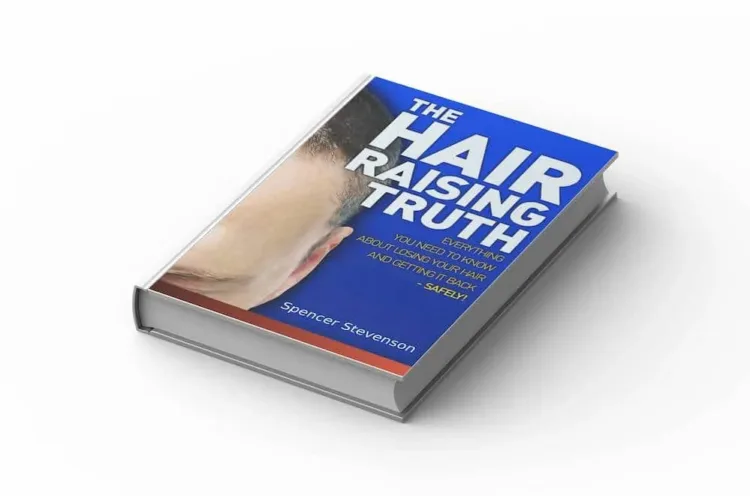
The Hair Raising Truth
Download the free E-book and find out everything you need to know about losing your hair and getting it back